


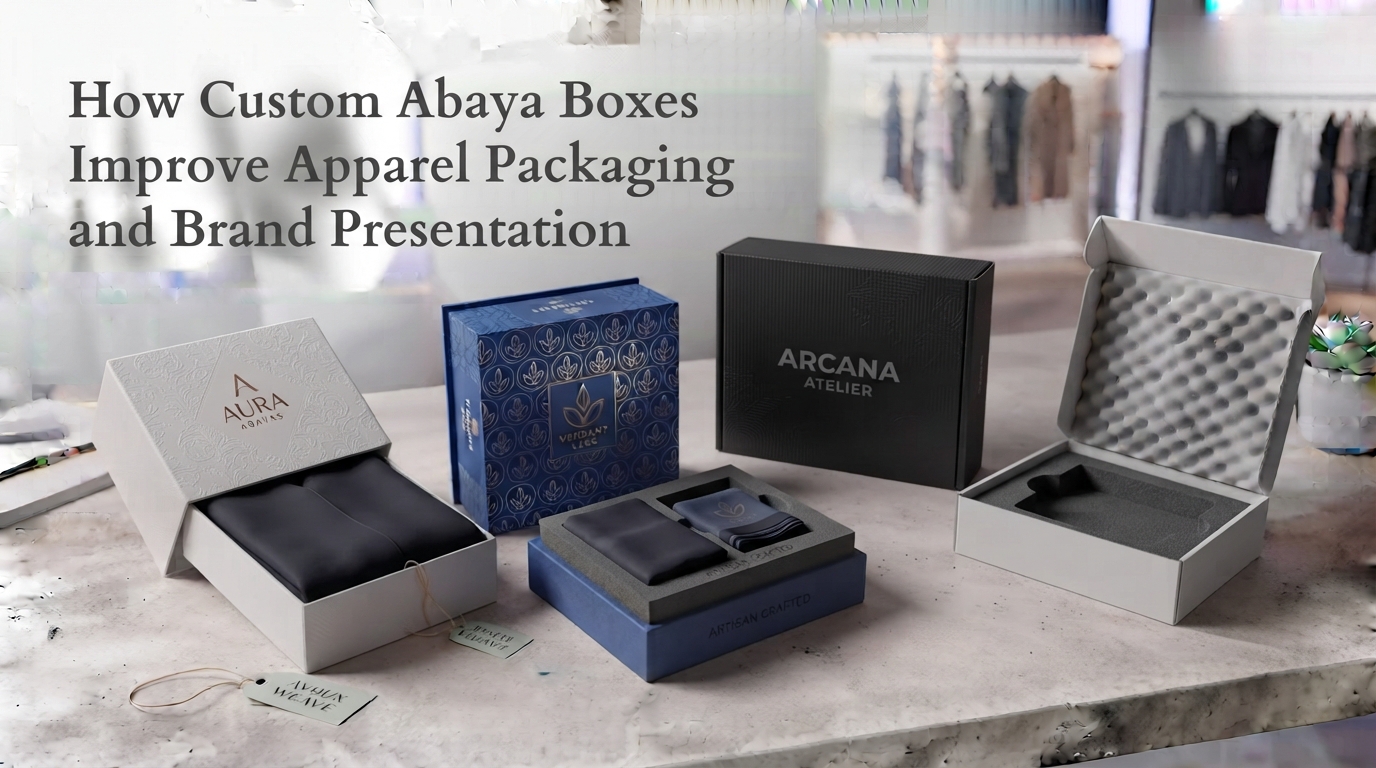
How Custom Abaya Boxes Improve Apparel Packaging and Brand Presentation
Packaging plays an important role in the fashion industry. It protects garments, supports product presentation, and gives brands another opportunity to communicate their identity. For businesses selling abayas, the packaging should reflect the product while also considering practical requirements such as garment size, folding method, storage, and delivery.

As fashion customers increasingly pay attention to the complete shopping experience, packaging has become more than a simple container. The right box can make an online order feel more organized, create a stronger first impression, and support a memorable unboxing experience.
For businesses looking for packaging designed around specific products, Custom Product Packaging can provide greater flexibility than relying entirely on standard box formats.
Why Packaging Matters for Abaya Brands
An abaya is often carefully selected based on fabric, design, fit, and overall appearance. The packaging should support that attention to presentation.
A well-planned package can help businesses:
- Keep garments neatly folded
- Improve product presentation
- Protect the garment during handling
- Support brand recognition
- Create a better gifting experience
- Improve ecommerce order presentation
- Organize products during fulfillment
The requirements may vary depending on the fabric and style. A lightweight abaya may need a different package from a thicker or more detailed garment.
For this reason, packaging development should begin with the actual product rather than selecting a box based only on general assumptions.
Choosing the Right Box Size
Box dimensions are one of the most important considerations for apparel packaging.
The final size should be based on the garment after it has been folded in the intended presentation format. Businesses should also consider any additional components that will be included.
These may include:
- Tissue paper
- Care cards
- Thank-you cards
- Brand inserts
- Gift messages
- Accessories
- Protective wrapping
A box that is too small may compress the garment or make packing difficult. An oversized box can create unnecessary empty space and may require additional filler.
Measuring the actual folded product is therefore an important first step.
Building a Consistent Apparel Packaging Experience
Fashion brands often sell more than one type of garment. A business may offer abayas alongside dresses, scarves, accessories, or other apparel products.
Creating a consistent packaging system can help connect these products under one recognizable brand identity.
Businesses can use custom apparel packages as part of a coordinated strategy across their product range.
A consistent system may use similar:
- Logo treatments
- Typography
- Brand colors
- Patterns
- Interior details
- Printed messaging
The boxes do not need to be identical. Different garments can require different sizes and structures while still sharing important visual characteristics.
Creating a Better Unboxing Experience
For ecommerce businesses, the package is often the customer’s first physical interaction with the brand.
The unboxing experience can include several stages:
- Receiving the package
- Opening the outer shipping packaging
- Seeing the apparel box
- Opening the box
- Viewing the garment presentation
- Reading any included brand materials
Each stage can contribute to the customer’s overall impression.
The objective does not have to be an elaborate or complicated experience. Simple, well-organized packaging can be equally effective when every component has a clear purpose.
Abaya Packaging for Premium Presentation
Some apparel brands may want their packaging to create a more premium presentation.
luxury abaya boxes can be considered when brands want to explore customized structures, printing, and presentation details for their products.
A premium appearance can be influenced by several factors, including:
- Box proportions
- Material selection
- Print quality
- Logo placement
- Typography
- Interior presentation
- Surface finishing
Adding numerous decorative features is not always necessary. A simple design with carefully selected details can create a refined and distinctive appearance.
The Role of Branding in Apparel Boxes
The exterior and interior of a package can both contribute to brand communication.
Businesses may include:
- Brand name
- Logo
- Tagline
- Website information
- Care messaging
- Social media details
- Patterns
- Product-related artwork
Visual hierarchy is important.
The customer should be able to recognize the brand without being overwhelmed by too much information. A well-positioned logo or carefully selected typography can sometimes have a greater impact than excessive graphics.
Choosing Materials for Abaya Boxes
Material selection depends on the intended packaging requirements.
Businesses should consider:
- Garment weight
- Fabric sensitivity
- Desired box strength
- Storage conditions
- Shipping requirements
- Presentation goals
- Production quantity
- Budget
A package used mainly for retail presentation may have different requirements from one that will travel through an ecommerce fulfillment network.
In some cases, a customer-facing presentation box can be placed inside separate outer shipping packaging to help protect it during transportation.
Using Tissue Paper and Interior Elements
Interior presentation can make a significant difference to apparel packaging.
Tissue paper can help create a neat arrangement around a folded garment. Businesses may also add printed cards, care instructions, or other inserts.
Possible interior elements include:
- Branded tissue paper
- Thank-you cards
- Care guides
- Promotional cards
- Gift messages
- Product information
These components should complement the product rather than overcrowding the package.
The most effective arrangement is usually one that makes the garment easy to remove while keeping the overall presentation organized.
Packaging for Online Abaya Stores
Online fashion stores face different challenges from physical retailers.
Customers cannot touch the fabric or see the product presentation before placing an order. The delivered package therefore becomes an important part of the overall experience.
Ecommerce brands should consider:
- Order dimensions
- Shipping conditions
- Package protection
- Product movement
- Customer presentation
- Ease of opening
The customer-facing apparel box can focus on presentation, while an outer shipping box or mailer can provide additional protection when necessary.
This approach can help businesses balance branding with practical shipping requirements.
Gift Packaging for Abayas
Abayas can also be purchased as gifts for special occasions.
Gift-ready packaging can improve the presentation and reduce the need for additional wrapping.
A brand may consider:
- A presentation-focused box
- Branded tissue paper
- A gift message card
- Decorative but practical finishing
- Organized garment placement
The packaging should remain appropriate for the brand and product. A premium gift presentation does not necessarily require excessive decoration.
Printing and Finishing Options
Printing gives apparel businesses an opportunity to make packaging more recognizable.
Depending on the design, a package may feature:
- Single-color printing
- Multi-color artwork
- Patterns
- Interior printing
- Brand messages
- Product-specific graphics
Finishing techniques may also influence the appearance and tactile quality of the box.
Possible approaches can include:
- Matte finishes
- Gloss finishes
- Soft-touch surfaces
- Foil details
- Embossing
- Debossing
The final selection should be based on the brand’s design direction and budget.
Using every available finishing option is not automatically better. Each detail should contribute to the intended customer experience.
Planning Packaging Around the Product
The most effective packaging process begins with understanding the actual garment.
Businesses should first identify:
- Folded dimensions
- Fabric thickness
- Product weight
- Included accessories
- Typical order quantity
- Sales channel
- Shipping method
Once these requirements are understood, the packaging structure and dimensions can be developed more effectively.
This reduces the risk of selecting packaging that looks attractive but does not properly suit the product.
Common Abaya Packaging Mistakes
Choosing a Generic Size Without Measuring
Actual folded dimensions should guide packaging development.
Ignoring the Fabric
Different fabrics can have different thicknesses and folding requirements.
Using Excessive Empty Space
Too much space inside the box can affect presentation and allow unnecessary movement.
Overcomplicating the Design
Excessive graphics and decorative features can reduce visual clarity.
Forgetting Shipping Requirements
A presentation box should be considered alongside the complete transportation process.
Ignoring Brand Consistency
Packaging should support the same visual identity used across the website, labels, and other customer touchpoints.
A Practical Packaging Checklist
Before approving apparel packaging, businesses can ask:
- Does the box fit the folded garment?
- Is there sufficient space for tissue or inserts?
- Does the structure suit the product weight?
- Does the artwork reflect the brand?
- Is the opening process easy?
- Will the garment remain neatly arranged?
- Is additional shipping protection required?
- Does the packaging work for the intended sales channel?
- Can the empty packaging be stored efficiently?
- Does the final specification fit the available budget?
Answering these questions early can help prevent costly changes later in the packaging process.
Why Customization Is Valuable for Apparel Brands
Generic packaging can provide a basic solution, but custom development gives businesses more control over the final experience.
A custom package can be planned around:
- Specific garment dimensions
- Brand identity
- Retail requirements
- Ecommerce fulfillment
- Gift presentation
- Seasonal collections
- Order quantities
This flexibility allows brands to create packaging that is more closely aligned with their products and customers.
For apparel companies, packaging can become another meaningful brand touchpoint rather than simply the final step in fulfillment.
Frequently Asked Questions
1. What are abaya boxes used for?
Abaya boxes are designed to package and present folded abayas for retail, ecommerce, gifting, and other apparel applications.
2. Can abaya boxes be customized with branding?
Yes. Customization can include logos, colors, typography, patterns, interior printing, and selected finishing details depending on the packaging requirements.
3. How do I choose the right size for an abaya box?
Measure the abaya after folding it in the intended packaging configuration. Also consider tissue paper, inserts, accessories, and any other materials that will be placed inside.
4. Are abaya boxes suitable for ecommerce orders?
Yes. They can be used as customer-facing presentation packaging. Depending on shipping conditions, an additional outer package may be used for transportation protection.
5. Can abaya packaging be used for gift presentation?
Yes. A well-designed box can improve gift presentation and can be combined with tissue paper, branded cards, or a gift message.
Conclusion
Packaging can play an important role in how an apparel brand presents its products and communicates with customers.
For abaya businesses, the right box should begin with the garment itself. Folded dimensions, fabric, accessories, presentation goals, branding, and shipping requirements should all be considered during the planning process.
By combining practical product protection with consistent branding and thoughtful presentation, businesses can create packaging that supports both the garment and the overall customer experience.