


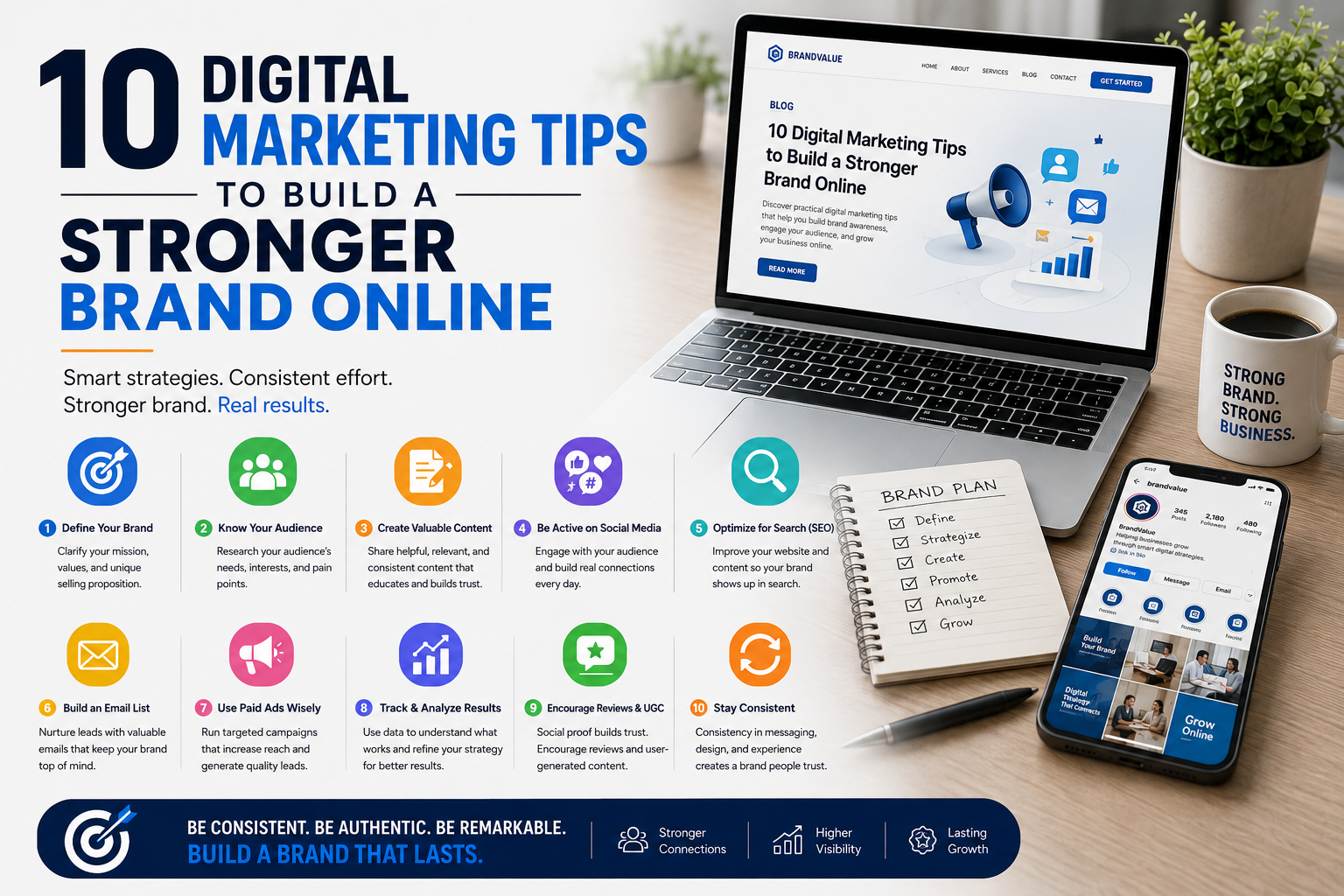
10 Digital Marketing Tips to Build a Stronger Brand Online
Most businesses measure digital marketing success by traffic, clicks, or conversions. Those numbers matter, but they only tell part of the story. The businesses that grow steadily over time are usually the ones that treat digital marketing as a long-term branding exercise, not just a series of campaigns aimed at short-term wins. A visitor who converts once is useful. A visitor who recognizes your brand, trusts it, and comes back without needing to be convinced again is far more valuable.
Building that kind of recognition takes more than a good ad or a viral post. It requires a consistent identity, a clear understanding of who you’re talking to, and a willingness to show up the same way across every channel your audience uses. Below are ten practical ways to strengthen your brand while still driving the traffic and conversions every business needs.
1. Define What Your Brand Stands For
Before any campaign, content calendar, or ad spend, a business needs to know what it actually stands for. This isn’t about writing a mission statement that sits unused on a page somewhere. It’s about having a clear enough sense of your values, personality, and positioning that every piece of content you publish feels like it came from the same source.
Ask what your business does differently, who it serves best, and what tone feels authentic when you communicate. A financial advisory firm and a skincare brand shouldn’t sound the same, even if they’re both writing blog posts and sending newsletters. The businesses that struggle to build recognition are often the ones that never settled on a clear identity in the first place, so their marketing shifts personality every few months depending on trends.
Once you know what your brand stands for, that clarity should show up everywhere: your website copy, your social captions, your customer service replies, and eventually the products or services themselves.
2. Understand Your Target Audience
A strong brand identity only works if it’s aimed at the right people. Too many businesses build their marketing around who they wish their customers were, rather than who actually buys from them.
Spend time researching your audience’s real pain points, not just their demographics. What are they searching for online? What questions do they ask before making a purchase? What content do they actually engage with, and what do they scroll past? Tools like search query reports, customer surveys, and even a close read of your own reviews can reveal more than broad market research.
This matters because content that ignores audience behavior tends to feel generic. A service business targeting busy professionals needs different messaging than one targeting retirees, even if they offer a similar core service. Understanding your audience isn’t a one-time task either. Preferences shift, so revisiting this research every so often keeps your marketing grounded in reality rather than assumptions from a year ago.
3. Create Content That Provides Real Value
Content that exists purely to promote a product rarely builds trust. Content that teaches, explains, or genuinely helps someone solve a problem tends to do far more for a brand’s reputation, even when it isn’t selling anything directly.
This could mean writing detailed how-to guides, answering common customer questions publicly, or sharing insights from your own experience running the business. A small business selling home organization products, for example, might publish practical tips on decluttering a kitchen, not just product photos. That kind of content positions the brand as knowledgeable rather than purely transactional.
Real value doesn’t have to mean long articles either. A short, genuinely useful social post can do the same job. The key is asking whether the content helps the audience in some way, or whether it only helps the business.

4. Keep Your Branding Consistent Across Every Touchpoint
Consistency is one of the most underrated tools in digital marketing. When your logo, color palette, tone of voice, and messaging feel the same whether someone finds you on Instagram, your website, an email newsletter, or a search ad, it builds a sense of familiarity. Familiarity, over time, turns into trust.
Inconsistency tends to creep in quietly. A business might use a playful tone on social media but sound overly formal in email campaigns. Or their website might look polished while their ads use mismatched fonts and colors. None of these are dramatic mistakes on their own, but together they make a brand feel less established, even if the underlying product is excellent.
For businesses that sell physical products, this consistency doesn’t have to stop once someone completes a purchase online. The brand experience can continue into the physical world as well. Product presentation, printed inserts, and even something as simple as custom packaging can echo the same visual identity a customer already saw on the website or in an ad. When the unboxing experience matches the digital one, it reinforces that this is the same brand the customer chose to trust, rather than feeling like a disconnected afterthought.
This kind of continuity doesn’t require a large budget. It just requires intention. A consistent brand isn’t one that spends the most, it’s one that shows up the same way, every time, everywhere.
5. Build a Strong Social Media Presence
Not every platform is right for every business, and trying to maintain a presence everywhere often leads to weaker content overall. It’s usually better to choose two or three platforms where your audience genuinely spends time and commit to showing up consistently there.
Consistency here means more than posting frequency. It means understanding how each platform’s audience behaves. A tutorial that performs well on YouTube might need to be reformatted entirely for a short-form video platform. A conversational, informal tone might work on one channel but feel out of place on another aimed at a more professional audience.
Engagement matters as much as posting. Responding to comments, asking questions, and participating in conversations rather than only broadcasting content helps humanize a brand and keeps an audience genuinely interested rather than just scrolling past.
6. Use SEO to Improve Discoverability
Search engine optimization is often treated as a technical checklist, but at its core, it’s about understanding what people are actually searching for and making sure your content answers that intent clearly.
Start by thinking about the specific questions your ideal customer types into a search bar. Someone researching “how to choose a moving company” has different intent than someone searching a specific company’s name directly, and your content should reflect that difference. Beyond keyword relevance, on-page basics like clear headings, descriptive titles, and reasonably fast-loading pages all contribute to how well your content performs.
Internal linking is another piece that’s easy to overlook. Connecting related articles or pages on your own site helps both search engines and readers navigate your content more easily, keeping visitors engaged with more of what you offer rather than leaving after a single page.
7. Use Email Marketing to Build Relationships
Email tends to get overlooked in favor of flashier channels, but it remains one of the most direct ways to maintain a relationship with an audience that already knows your brand. Unlike social media, where algorithms decide who sees your content, an email list is a direct line of communication.
The businesses that use email well tend to focus on providing consistent value rather than only sending promotional offers. A useful tip, a behind-the-scenes update, or a genuinely helpful resource keeps subscribers engaged and looking forward to future emails, rather than tuning out or unsubscribing.
Segmentation also helps here. A new subscriber and a repeat customer likely need different messaging, and treating every email as one-size-fits-all often reduces its effectiveness over time.
8. Improve the Customer Journey
A strong brand identity can be undermined quickly by a frustrating website or a confusing purchase process. Every interaction a customer has with your business, from the first visit to a page, through checkout, to any follow-up communication, shapes how they perceive your brand overall.
Take time to actually walk through your own website as a new visitor would. Is the navigation intuitive? Is it clear what action you want someone to take next? Does the checkout process feel smooth, or does it introduce unnecessary friction? Small issues, like slow load times or unclear product descriptions, can quietly push potential customers away before they ever get the chance to experience what makes your business worth choosing.
The post-purchase experience matters too. A simple confirmation email, clear shipping updates, or a genuine thank-you message can leave a lasting impression that encourages repeat business.
9. Build Trust Through Authentic Marketing
Trust is built slowly and lost quickly. Exaggerated claims, misleading offers, or inconsistent messaging can damage a brand’s credibility even if the underlying product or service is solid.
Authentic marketing means being upfront about what your business does well, and honest about limitations rather than overselling. Sharing genuine customer reviews, including ones that mention minor drawbacks alongside the positives, often builds more credibility than only showcasing perfect five-star testimonials.
Transparency extends to how you communicate as well. If there’s a delay, a pricing change, or an issue with a product, addressing it directly and clearly tends to build more long-term trust than staying silent and hoping customers don’t notice.

10. Track Results and Improve
None of the strategies above work well without some way to measure what’s actually happening. Tracking website traffic, engagement rates, conversion numbers, and other relevant metrics gives you a realistic picture of what’s working and what needs adjustment.
This doesn’t mean obsessing over every daily fluctuation. It means reviewing performance regularly enough to notice patterns. Maybe a certain type of content consistently drives more engagement, or a particular email subject line performs better than others. Maybe traffic is strong but conversions are low, which might point to a friction point in the customer journey rather than a content problem.
The businesses that improve steadily over time are usually the ones willing to look honestly at their data, adjust their approach, and treat marketing as an ongoing process rather than a one-time setup.
Conclusion
Building a strong brand online isn’t the result of a single tactic or a clever campaign. It comes from consistency across every channel, genuine understanding of your audience, content that actually helps people, and a customer experience that feels considered rather than accidental. These elements reinforce each other over time, turning one-time visitors into customers who recognize, trust, and return to your brand without needing to be convinced all over again. None of this requires a massive budget or an overnight transformation. It requires steady, intentional effort applied consistently across the places your audience already spends their time, both online and, when relevant, in the physical experience that follows.